 I went to my events last week, one being the Los Angeles County Museum of Art. In walking around, it was cool to see some pieces of art that tied into what we have been learning in class. One of the first pieces of art that interested me was a piece made of graphite and ink entitled The Stem of Summer Shoot by Llyn Foulkes. It intrigued me and confused me because there seemed to be a blackboard with an eraser, some type of photograph with a cross on it. On the left half of the picture seems to be a human body in the doorframe with the midsection shaded in and an eye on the chest. To me, it seemed to be a form of bioart as the person in the picture could have been genetically modified, the cross symbolizing a medical procedure. In reading more about Llyn Foulkes, I learned that he is an artist and musician that has been producing contemporary art for the past 5 decades: “His eclectic oeuvre includes intriguing meditations on the nature of photographic images, a light romance with nostalgic Americana, savage portraits...and scathing commentaries on the insidious nature of commercial pop culture” (“About - Llyn Foulkes” 1).
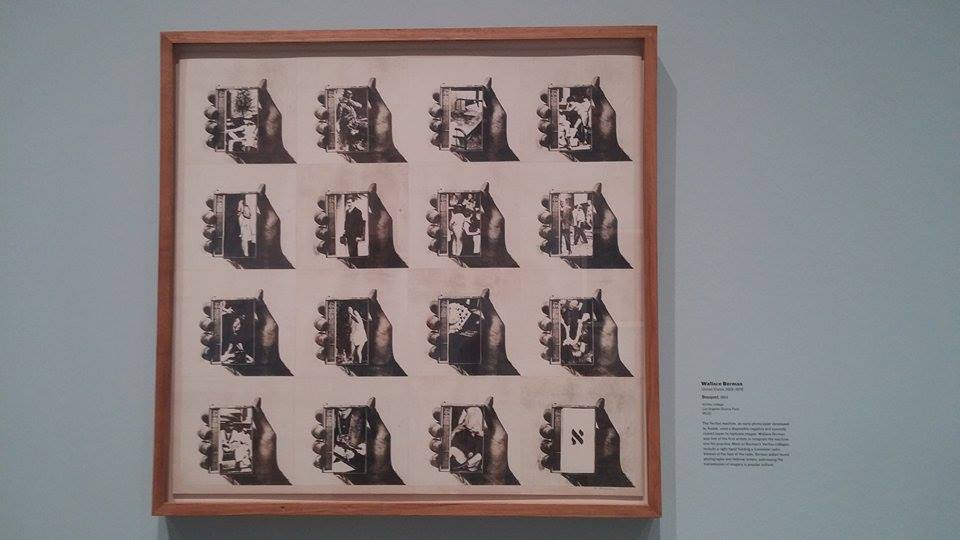 Another piece of art that intrigued me is a piece called Bouquet by Wallace Berman. This piece is a collage of photos of a Verifax machine, “an early photocopier developed by Kodak, [and] used disposable negative and specifically coated paper to replicate images” (LACMA). Berman’s work is interesting because he was one of the first people to use machines in his art. This ties into our class lectures on robotics and art. As an artist, his collages are typically, “culled from newspaper and magazine articles, combines hand-drawn Hebrew characters and Kabbalah references with identifiable pop culture images” (“Wallace Berman -Photographs and Other Works of Art” 1).
 The last piece that really captured my attention was an Untitled image by Dominick di Meo. I found this interesting because it tied into my midterm project. His drawing represents his fascination with dreams and the state of being unconscious, particularly nightmares and hallucinations that he had as a child when he was ill with polio. This ties into the lectures on neuroscience and art, understanding the human brain and how it functions in understanding the world around us. His work is typically done in ink to produce eerie pictures that are “so dark [they’re] blacker than black, a terminal black, eating light and spitting out void...Cartoonish heads are misshapen, bleak, blank, quizzical, but rich with detail and bussing with vortical motion” (“Contemporary Art Daily”). His work is typically dark and eerie as he tries to figure out the human mind and our interpretations of the images that we see.
I would definitely recommend this exhibition to others. In addition to the lights that LACMA is well-known for, there are lots of cool exhibits to see. One that I didn’t get to while I was there but would see when I go back is the light show where you’re standing in this all white room and there is this kind of color show that is put on that makes you lose track of where you are. It’s a show dedicated to the artist’s love of sunsets.
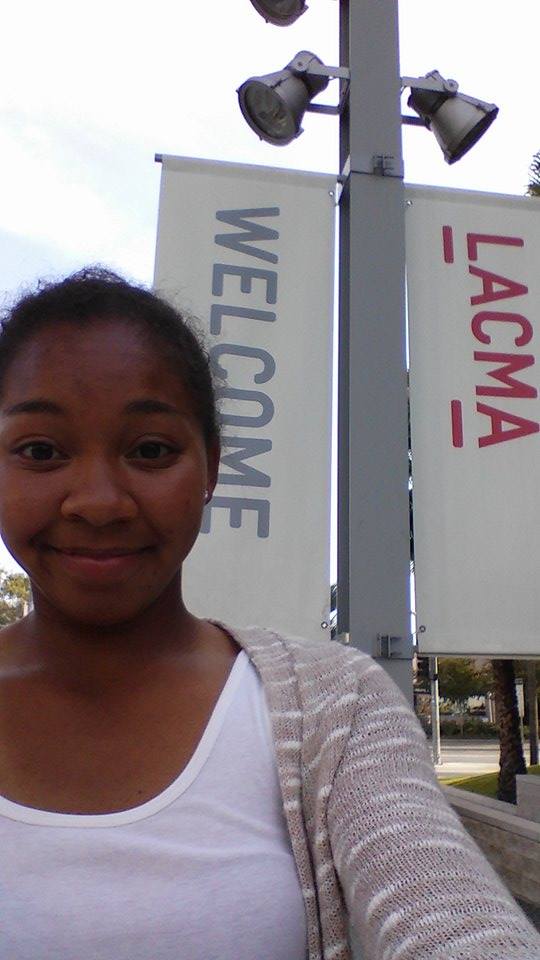
Proof the I attended this event:


Bibliography
"About – Llyn Foulkes." Llyn Foulkes RSS. N.p., n.d. Web. 10 June 2015. <http://llynfoulkes.com/?page_id=8>.
"Contemporary Art Daily." Contemporary Art Daily RSS. Contemporary Art Daily, 9 Apr. 2013. Web. 10 June 2015. <http://www.contemporaryartdaily.com/2013/04/dominick-di-meo-at-thomas-dane/>.
"Los Angeles County Museum of Art." Los Angeles County Museum of Art. Museum Associates, n.d. Web. 10 June 2015. <http://www.lacma.org/>.
Vesna, Victoria. “Conscious / Memory (Part 1).” Lecture. 16 Nov 2012. <http://www.youtube.com/watch?feature=player_embedded&v=DLVQIwOn7o8>
"Wallace Berman - Photographs and Other Works of Art." Michael Kohn Gallery RSS. Kohn Gallery, 30 Nov. 2007. Web. 10 June 2015. <http://www.kohngallery.com/berman-exhibitions/2014/3/31/uns20gmb8gx6irtvu9zexhtmp03vlb>.

No comments:
Post a Comment