Saturday, June 13, 2015
Final Project: Super Recovery Drug
https://docs.google.com/presentation/u/1/d/1Z0u3vXRSjj4S5r5lgaNY8sO5tewQhEAw6A4guFnNU_k/edit#slide=id.g89be42c1c_2_5

Friday, June 12, 2015
Event #3: Hammer Museum
Living so close to the Hammer Museum, it’s a shame that I hadn’t visited it sooner, even knowing that it was free to attend. It’s actually a really cool place to visit. It’s very colorful and seems more fun and inviting than the conventional museum and I would recommend to anyone to come visit, especially for being free.
The “Game Room” exhibit was one of the most interesting things that I’ve experienced. It breaks away from the traditional interactions that one might have at a museum. It is used as an escape for people to come and relax and play with art. This connects with the class in terms of the math and geometry used in each of the art pieces to create a fun, interactive environment. Going back to one of the first lectures with the intersection of math and art and science, it could be argued that aspects of the pieces in the room represent the golden ratio of lines in proportion to one another.

 This piece, Glued to You by Cameron Jamie, was one that really intrigued me. Some of the first things that came to mind were a jellyfish and the brain. In terms of the brain, I thought of the lines extending down from the cluster axons and neuron channels. When reading about the artist, I found a connection. His work “deals with American history and culture, in particular their dysfunctional manifestations. Jamie’s sharp critical gaze often focuses on popular culture and its impact on everyday life and the psyche” (Vergne 1). This, i realized connected really well with the lectures on neuroscience and understanding the brain and why people do the things that they do.
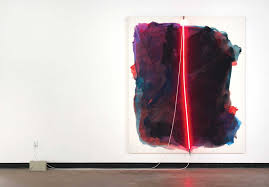
Another piece that interested me was Ruby I by Mary Weatherford. It’s a form of abstract art, but with a scarce but impactful use of light and electricity. “The neon causes a push-and-pull with the viewer’s attention, at times drawing the eye towards it, and at other times disappearing into a negative space that frames the paintings underneath, highlighting the canvas” (Williams 1).
Proof that I attended the event:
Bibliography
"Game Room - Hammer Museum." The Hammer Museum. Hammer Museum, 2012. Web. 10 June 2015. <http://hammer.ucla.edu/exhibitions/2012/game-room/>.
Torrelio, Sebastian. "“Game Room” Exhibit at Hammer Museum Encourages Interaction." Daily Bruin. Daily Bruin, 3 Dec. 2012. Web. 10 June 2015. <http://dailybruin.com/2012/12/03/game-room-exhibit-at-hammer-museum-encourages-interaction/>.
Vergne, Philippe. "HOW LATITUDES BECOME FORMS : Cameron Jamie." HOW LATITUDES BECOME FORMS : Cameron Jamie. Walker Art Center, n.d. Web. 10 June 2015. <http://latitudes.walkerart.org/artists/indexe106.html>.
Vesna, Victoria. “Conscious / Memory (Part 1).” Lecture. 16 Nov 2012. <http://www.youtube.com/watch?feature=player_embedded&v=DLVQIwOn7o8>.
Williams, Maxwell. "Art In America." Mary Weatherford: L.A. Confidential. Code and Theory, 19 May 2014. Web. 13 June 2015. <http://www.artinamericamagazine.com/news-features/news/mary-weatherford-la-confidential/>.
Thursday, June 11, 2015
Event #2: Getty Museum
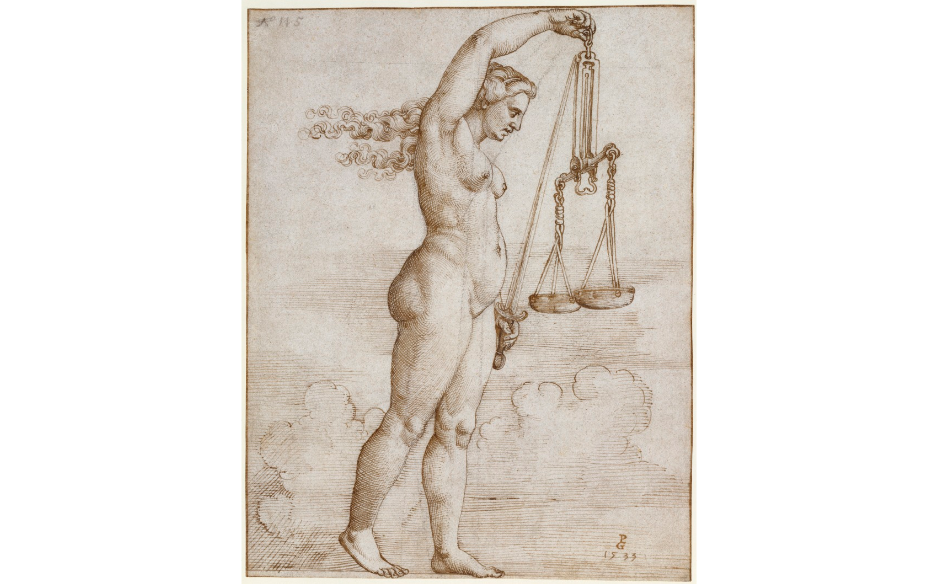
This event is actually my favorite touristy site here in LA which is the Getty Museum. Not only are there beautiful views of LA, but there is a wide variety of art. My favorite type of art is drawings because there is so much detail that goes into it, not only in terms of lines but shading etc. So it was only fitting that this was my first stop when I arrived. One piece of work that caught my eye was the Allegory of Justice by Georg Pencz. This piece is relative to the course because the lines and proportions of the the woman and the scales have been paid great detail. This is similar to the lectures on math and art. It also goes back to what was described in the lecture as a one point perspective that conveys 3D space on a 2D canvas. In researching him, it was interesting to learn that he was actually well-known as a painter who was one of the “godless painters” who did not believe in baptism or transubstantiation.
 Another exhibit at the museum was the Light, Paper, Process: Reinventing Photography. This exhibit takes the work of 7 artists who experiment with different “light sensitivity and chemical [processes] of photographic papers, challenging us to see the medium anew” (Light, Paper, Process: Reinventing Photography). We are always trying to find new ways to manipulate the materials around us to create new forms of objects and substances. In researching one of the artists, James Welling, I found that he was the head of photography in the Department of Art for a brief period of time. His photography ranged from light sources to abstractions to tiles. Welling was interested in in creating new mediums and new ways of interpreting objects around us.
 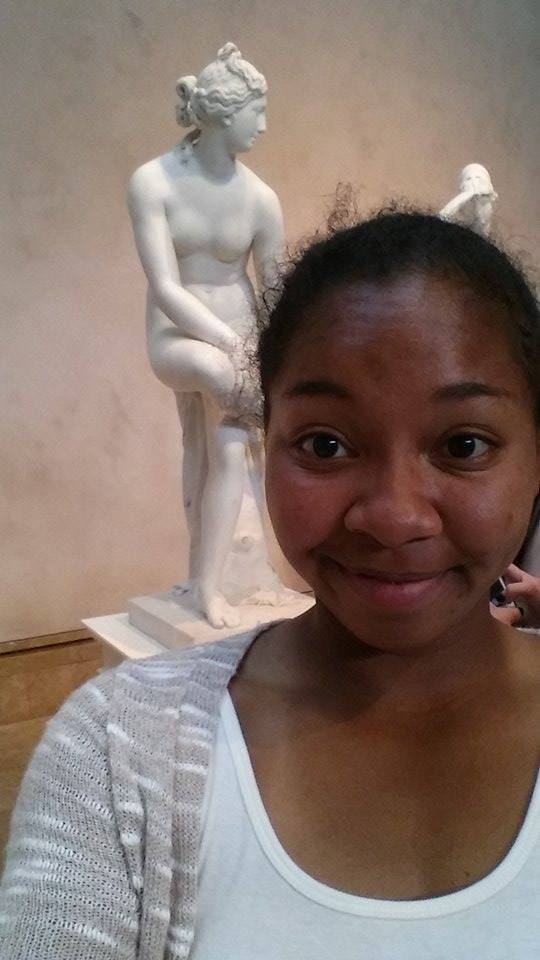 Another interesting piece that I saw was of the Greek goddess Venus. It wasn’t necessarily the sculpture that intrigued me but as I was looking at it, I thought back to the lectures on nanotechnology. I remembered that porcelain along with glass and other materials that I was seeing contained nanoparticles. To actually see this was strange to me because it’s still hard for me to wrap my head around the idea that in a time when we today would have thought had limited resources, actually had advanced technology. I did some research into the sculptor, Joseph Nollekens. He was most known for his portrait busts and dabbled in the styles of Baroque and Classical Roman sculpture.
As I mentioned, the Getty is my favorite site here in LA. I would recommend this event to anyone not only for the art and the views, but also the beauty of the garden down below. I’ve been several times and found it to be the prettiest in the fall and winter when the leaves turn brown.
Proof the I attended the event:
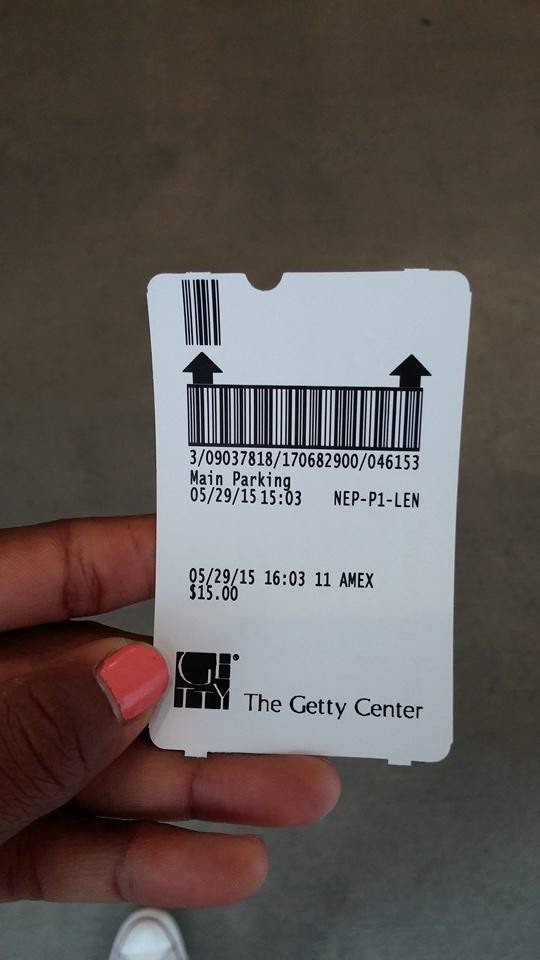

Bibliography
"Georg Pencz (German, 1500-1550): Original Engravings." Georg Pencz (German, 1500-1550): Original Engravings. Spaightwood Galleries, 7 June 2015. Web. 10 June 2015. <http://spaightwoodgalleries.com/Pages/Pencz.html>.
"The Getty Museum." Getty Museum. J. Paul Getty Trust, n.d. Web. 10 June 2015. <http://www.getty.edu/art/exhibitions/process/>.
Gimzewski, James K. "Nanotech Jim Pt4." YouTube. YouTube, n.d. Web. 10 June 2015. <https://www.youtube.com/watch?v=yHCuZetAIhk>.
"James Welling." James Welling. N.p., n.d. Web. 10 June 2015. <http://jameswelling.net/biography>.
"Joseph Nollekens (1737-1823)." Joseph Nollekens: Neoclassical Sculptor, Biography. Visual-arts-cork.com, n.d. Web. 10 June 2015. <http://www.visual-arts-cork.com/sculpture/joseph-nollekens.htm>.
Wednesday, June 10, 2015
Event #1: LACMA
 I went to my events last week, one being the Los Angeles County Museum of Art. In walking around, it was cool to see some pieces of art that tied into what we have been learning in class. One of the first pieces of art that interested me was a piece made of graphite and ink entitled The Stem of Summer Shoot by Llyn Foulkes. It intrigued me and confused me because there seemed to be a blackboard with an eraser, some type of photograph with a cross on it. On the left half of the picture seems to be a human body in the doorframe with the midsection shaded in and an eye on the chest. To me, it seemed to be a form of bioart as the person in the picture could have been genetically modified, the cross symbolizing a medical procedure. In reading more about Llyn Foulkes, I learned that he is an artist and musician that has been producing contemporary art for the past 5 decades: “His eclectic oeuvre includes intriguing meditations on the nature of photographic images, a light romance with nostalgic Americana, savage portraits...and scathing commentaries on the insidious nature of commercial pop culture” (“About - Llyn Foulkes” 1).
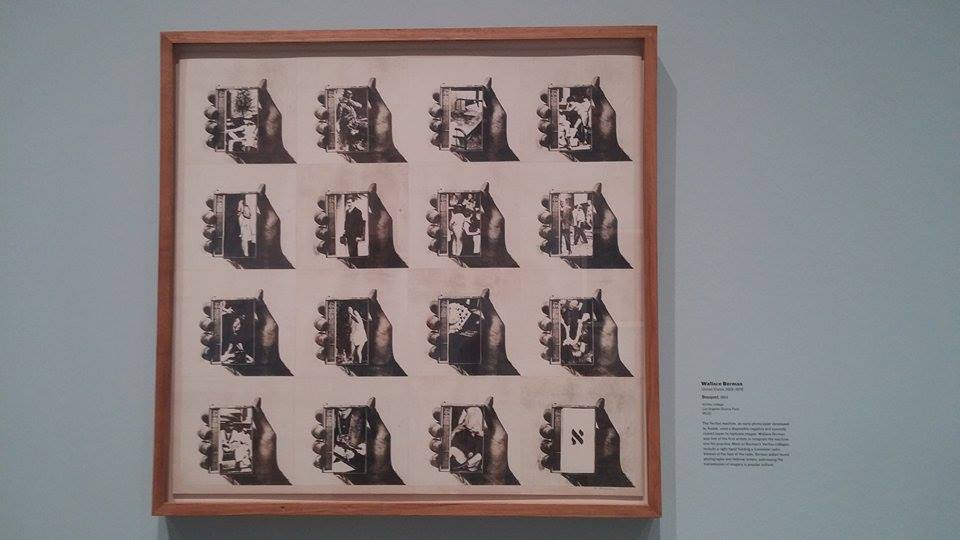 Another piece of art that intrigued me is a piece called Bouquet by Wallace Berman. This piece is a collage of photos of a Verifax machine, “an early photocopier developed by Kodak, [and] used disposable negative and specifically coated paper to replicate images” (LACMA). Berman’s work is interesting because he was one of the first people to use machines in his art. This ties into our class lectures on robotics and art. As an artist, his collages are typically, “culled from newspaper and magazine articles, combines hand-drawn Hebrew characters and Kabbalah references with identifiable pop culture images” (“Wallace Berman -Photographs and Other Works of Art” 1).
 The last piece that really captured my attention was an Untitled image by Dominick di Meo. I found this interesting because it tied into my midterm project. His drawing represents his fascination with dreams and the state of being unconscious, particularly nightmares and hallucinations that he had as a child when he was ill with polio. This ties into the lectures on neuroscience and art, understanding the human brain and how it functions in understanding the world around us. His work is typically done in ink to produce eerie pictures that are “so dark [they’re] blacker than black, a terminal black, eating light and spitting out void...Cartoonish heads are misshapen, bleak, blank, quizzical, but rich with detail and bussing with vortical motion” (“Contemporary Art Daily”). His work is typically dark and eerie as he tries to figure out the human mind and our interpretations of the images that we see.
I would definitely recommend this exhibition to others. In addition to the lights that LACMA is well-known for, there are lots of cool exhibits to see. One that I didn’t get to while I was there but would see when I go back is the light show where you’re standing in this all white room and there is this kind of color show that is put on that makes you lose track of where you are. It’s a show dedicated to the artist’s love of sunsets.
Proof the I attended this event:

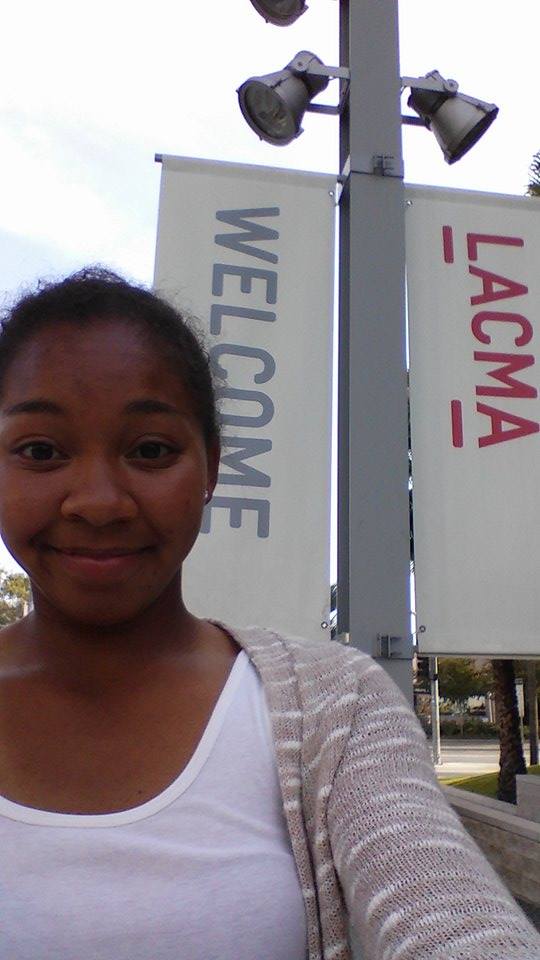

Bibliography
"About – Llyn Foulkes." Llyn Foulkes RSS. N.p., n.d. Web. 10 June 2015. <http://llynfoulkes.com/?page_id=8>.
"Contemporary Art Daily." Contemporary Art Daily RSS. Contemporary Art Daily, 9 Apr. 2013. Web. 10 June 2015. <http://www.contemporaryartdaily.com/2013/04/dominick-di-meo-at-thomas-dane/>.
"Los Angeles County Museum of Art." Los Angeles County Museum of Art. Museum Associates, n.d. Web. 10 June 2015. <http://www.lacma.org/>.
Vesna, Victoria. “Conscious / Memory (Part 1).” Lecture. 16 Nov 2012. <http://www.youtube.com/watch?feature=player_embedded&v=DLVQIwOn7o8>
"Wallace Berman - Photographs and Other Works of Art." Michael Kohn Gallery RSS. Kohn Gallery, 30 Nov. 2007. Web. 10 June 2015. <http://www.kohngallery.com/berman-exhibitions/2014/3/31/uns20gmb8gx6irtvu9zexhtmp03vlb>.
Subscribe to:
Comments (Atom)